


Magical Audits
Why Most GDPR Audits Fail: Key Takeaways from Our Webinar with Rowenna Fielding Most GDPR audits do not fail because […]
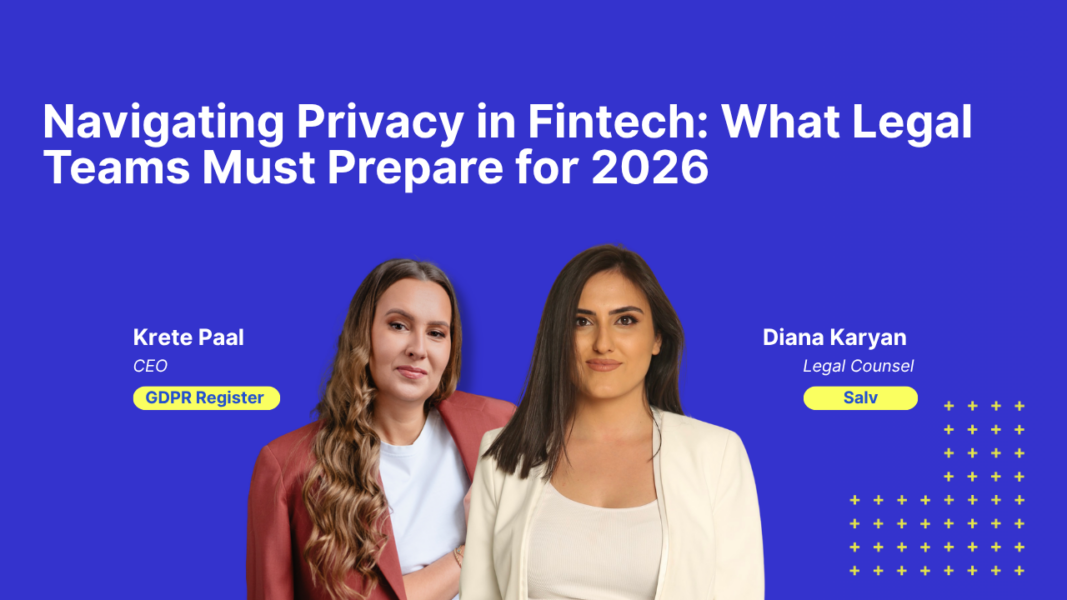
GDPR Register hosted its final webinar of 2025 with a clear message for founders, product leaders, and investors: privacy and compliance are no longer optional—they are the foundation of scalable FinTech and regtech businesses heading into 2026.
In this session, featuring insights from Diana Karyan – Legal Counsel at Salv. The discussion unpacked how startups can move beyond reactive compliance and instead build “minimum viable compliance” as a core part of their product and growth strategy.
A persistent myth in early-stage startups is that regulators will “leave you alone” in the beginning.
That assumption is increasingly dangerous.
Regulatory enforcement is no longer limited to Big Tech. Startups and scale-ups are actively being fined, audited, and scrutinised—especially in financial services.
More importantly:
As highlighted in the webinar, privacy is not a blocker—it’s “the architecture upon which you create value.”
Just like MVPs transformed product development, minimum viable compliance (MVC) is becoming a standard in fundraising and due diligence.
Investors today expect startups to demonstrate:
If your startup involves AI, expectations are even higher.
Under frameworks like the EU AI Act, compliance is risk-based—but strict.
In practice, if your product touches credit scoring, fraud detection, or risk assessment, it will likely be classified as high-risk AI.
And investors don’t want to inherit liability.
One of the strongest takeaways from the session:
Transparency and explainability are no longer optional.
Startups building AI systems must:
A 2023 German case on credit scoring reinforced that both AI providers and deployers share liability—a critical shift for SaaS and FinTech companies.
With upcoming regulations like PSD3, payment service providers (PSPs) face a major shift:
If fraud prevention measures are insufficient, liability may fall on the PSP.
This changes everything.
Startups in payments and FinTech must:
The webinar highlighted a growing trend: data-sharing networks between financial institutions.
These networks enable:
One example discussed included over 350 collaborative investigations and around 6 million euros in prevented fraud.
This signals a clear direction for 2026: FinTech compliance is becoming a team sport.
One of the most practical insights:
Legal should not be a final checkbox.
Instead, high-performing teams:
This aligns with modern agile development and reduces costly rework later.
If you take one thing from this webinar, let it be this:
And not as a static document.
Build a dynamic, living map that shows:
This creates traceability, audit readiness, stronger security, and faster compliance responses.
Another overlooked issue is keeping too much data.
Startups often default to storing everything, but this creates:
The better approach is to be minimalistic, define retention policies, and implement automated deletion cycles.
A key mindset shift for 2026:
Privacy is not just compliance—it’s a business advantage.
Especially when selling to banks, financial institutions, and enterprise clients.
These buyers actively audit vendors for GDPR compliance, security controls, and operational resilience.
Strong privacy practices can win deals, not just avoid fines.
Regulation will continue evolving, especially with frameworks like:
Startups don’t need perfection.
They need documentation, clear reasoning, and demonstrable effort.
The goal is not to be perfect. The goal is to be defensible.
Why Most GDPR Audits Fail: Key Takeaways from Our Webinar with Rowenna Fielding Most GDPR audits do not fail because […]

EU AI Act: Year One Review, Compliance Challenges, and What Comes Next The EU AI Act remains a major topic […]