


Irish Data Protection Commission to announce Twitter fine on December 17th
Commissioner Helen Dixon will have an active week with her office’s first potential big tech fine under GDPR and a […]
To better exploit the potential of ever-growing data in a trustworthy European framework, the Commission today proposes new rules on data governance – a new Data Governance Act. The Regulation will facilitate data sharing across the EU and between sectors to create wealth for society, increase control and trust of both citizens and companies regarding their data, and offer an alternative European model to data handling practice of major tech platforms.
The amount of data generated by public bodies, businesses and citizens is constantly growing. It is expected to multiply by five between 2018 and 2025. These new rules will allow this data to be harnessed and will pave the way for sectoral European data spaces to benefit society, citizens and companies. In the Commission’s data strategy of February this year, nine such data spaces have been proposed, ranging from industry to energy, and from health to the European Green Deal. They will, for example, contribute to the green transition by improving the management of energy consumption, make delivery of personalised medicine a reality, and facilitate access to public services.
Delivering on the announcement in the data strategy, the Regulation will create the basis for a new European way of data governance that is in line with EU values and principles, such as personal data protection (GDPR), consumer protection and competition rules. It offers an alternative model to the data-handling practices of the big tech platforms, which can acquire a high degree of market power because of their business models that imply control of large amounts of data. This new approach proposes a model based on the neutrality and transparency of data intermediaries, which are organisers of data sharing or pooling, to increase trust. To ensure this neutrality, the data-sharing intermediary cannot deal in the data on its own account (e.g. by selling it to another company or using it to develop their own product based on this data) and will have to comply with strict requirements.
The Data Governance Act includes:
Source: European Commission
Photo by Guillaume Périgois on Unsplash
Commissioner Helen Dixon will have an active week with her office’s first potential big tech fine under GDPR and a […]
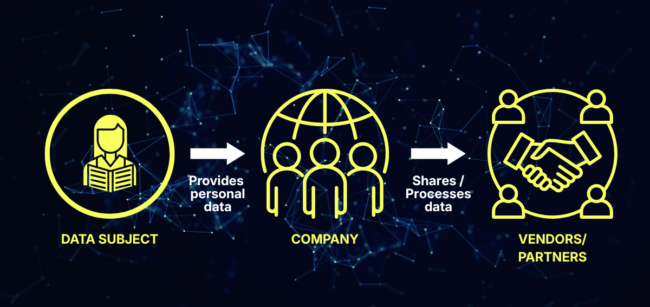
Keeping track of how your company uses personal data may sound complicated, but under the GDPR it’s required for most […]