


Six Months With GDPR in Force. What Happened?
The GDPR, that came into force on the 25th of May, 2018, expanded the EU‘s data protection area coverage, introduced […]
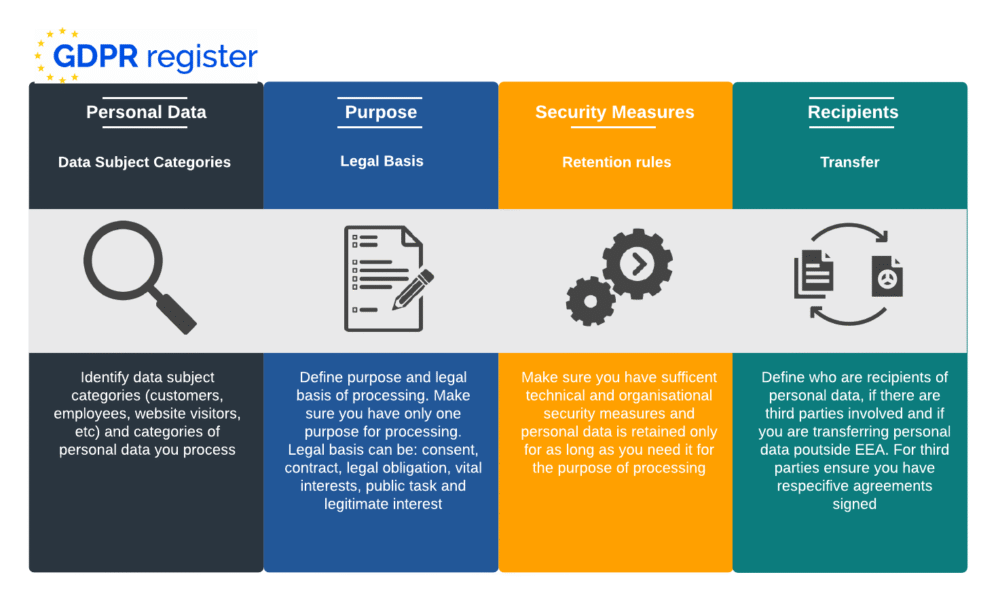
Article 30 of the EU General Data Protection Regulation (GDPR) requires organisations to maintain internal records, which contain the information of all personal data processing activities carried out by the organisation. These records help organisations understand what personal data they collect, where it comes from and how that data is being processed.
The records of processing activities (ROPA) must be in concluded in written or electronic form. If necessary, the supervisory authority can use the records to evaluate the accountability requirement of the organisation. For this reason, the record must be made available to the supervisory authority upon request.
The records of processing activities are not only a formal requirement, but they contain the core of information for managing compliance of the organisation and production of other required documentation like privacy policy, data processing agreements, data retention schedules, etc.
Article 30 GDPR stipulates that all records of processing activities have to be maintained by organisations employing more than 250 employees. Smaller organisations only need to document processing activities that:
Important!
This means that if you have customers and/or employees, you process their personal data periodically and regularly, so you need to keep records of processing activities related to such data subject categories.
If your organisation acts as a data controller, you are required by Article 30 of the GDPR to document at least the following:
According to Article 30 GDPR, Processors are also required to maintain the records of data processing activities. In this case, the records will include the following information:
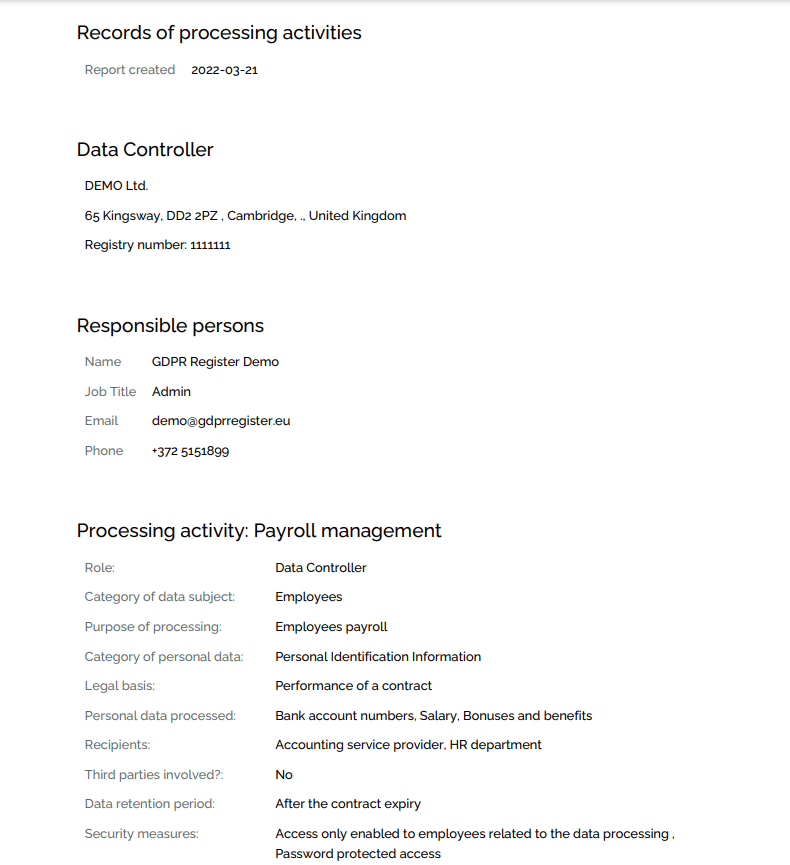
Records must be stored in electronic form and regularly updated. If the organisation has an obligation to appoint a Data Protection Officer (DPO), the obligation to keep a mapping of the processing activities is the responsibility of the Data Protection Officer. If the organisation does not have a designated DPO, the mapping of the records of the processing activities may also be considered by an employee who has the appropriate qualifications to perform such operation. It’s quite common to use external consultants to perform initial mapping of ROPA and hire a DPO-as-a-Service to cover the rest of ongoing DPO responsibilities.
You could start by mapping information systems and personal data to find out what information your organisation holds and where. It is important that different stakeholders from across your organisation are involved in the process. This helps prevent any type of personal data or processes from being overlooked. It is equally important to involve senior management so that your mapping project is supported and its importance is communicated to all involved stakeholders.
Once you have an overview of the amount of personal data and their locations, you can start compiling the records of processing activities. It’s up to you to decide how to do this – in a spreadsheet or using some modern tools, but we hope the next three steps will help you get easier to the final result.
Compile a questionnaire on data processing activities
You can share the questionnaire between the stakeholders and departments that process personal data. The questions could be:
Based on this data, draft the records of processing activities and interview stakeholders to refine the data and get a better understanding of the processes.
If some part of required documentation already existed in the company, find it and review the policies, procedures and agreements – this will help to compare the previously concluded documentation with the planned records and identify any inconsistencies with the actual situation.
It is obvious that the ROPA project is not an easy challenge. It will require considerable time resources and cooperation with stakeholders and other involved persons. To simplify this task, we have created a helpful tool – the GDPR Register.
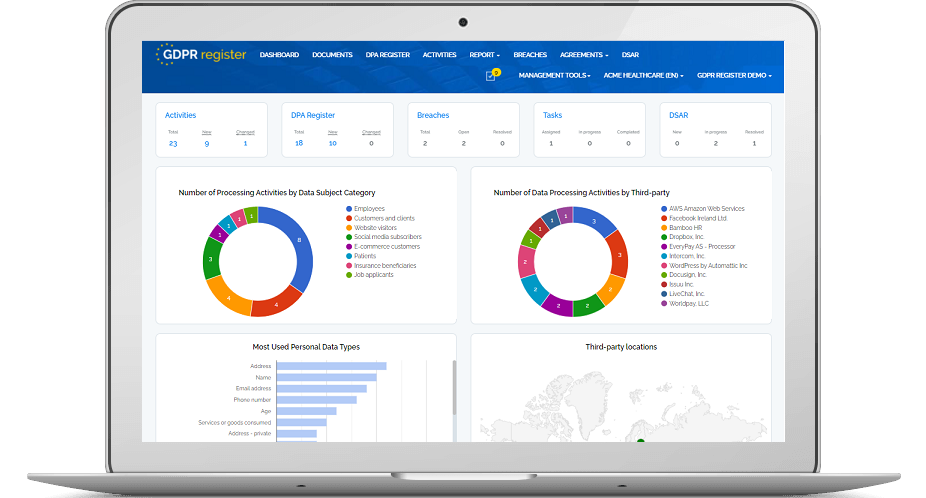
With GDPR Register you can do followitng:
More to read on this topic: The lawful basis for Data Processing under the GDPR
The GDPR, that came into force on the 25th of May, 2018, expanded the EU‘s data protection area coverage, introduced […]

Data protection requirements are becoming more complex in the European Union once again, and the European Court has begun to […]